「Transmission 9: The Unseen Threads of Fate」
When the cry of seagulls fades, I long to hear the heartbeat's serenade!
The workshop was his universe, and he—its god, weary from an eternal day. Dust hung in the beam of the single lamp like a frozen blizzard; beyond the frosted glass, the city hummed its muffled drone, but here, a different kind of motion reigned. And at the center of this motion stood Her.
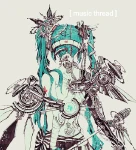
He named her Lira, yet it was not merely a name but a designation of function—an instrument for the reproduction of perfection.
His greatest work. She was ready.
Years had passed in meticulous sacrament—sketches, rejected prototypes, an endless pursuit of that singular, elusive grace. This Master of marionettes was a legend. Connoisseurs whispered of his dolls as beings nearly blessed with a soul. But all of them were but a prelude to Her. The final masterpiece. An absolute mechanism, where every joint was pedantic love, and every curve—the masterful incarnation of a yearning for the ideal.
Collectors paid fortunes for his early pieces; theaters deemed it an honor to acquire his creations. But the admiration and applause were to him but a distant murmur, like the sound of the sea beyond a wall. He was drawn by a single aim—the perfection of mastery… or the mastery of perfection.
She was to be the quintessence of all. Not merely another doll for a new performance, but the embodiment of the very idea of movement and matter… or the matter of movement.
Years of arduous, near-lunatic labor were spent not merely carving form from precious wood and bone, but sculpting an incarnate soul of grace. He polished, balanced, refined until the mechanism itself vanished, leaving only pure, self-sufficient beauty. The final speck of dust was swept away; the last joint was oiled. Without exaggeration, the masterpiece was complete.
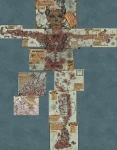
In the workshop drenched in the harsh glare of the spotlight—for he always rehearsed as though the hall were full—the Master took the control cross in his hands. His fingers, intimate with the weight and balance of each of his thousand creations, closed around it with cold certainty.
It began.
The first movements were flawless. Lira glided through space; her line was immaculate, each gesture a finished thought. The Master felt that familiar, iron calm of perfect equilibrium and control. This was his kingdom. His will, flowing through silk threads into an ideal form.
And then, in the midst of a most intricate pirouette, he noticed a flaw.
Not an error, no. A barely perceptible stubbornness in the trajectory of a wrist. A microscopic deviation from the angle he had set. His honed mind instantly locked onto the disturbance. He halted the action.
His attention, previously diffused across the entire figure, narrowed to a single point—to that minuscule joint. He dismantled the linkage, examined every component. All was impeccable. The mechanism gleamed in his hands with cold perfection.
He resumed. And the flaw recurred. Elsewhere now. As if the form itself resisted his intent, introducing into the pure geometry of motion a barely-there, living irregularity. Irritation, sharp and cold, pricked at him. He stopped again. Again, he delved into the mechanism. Nothing. Only flawless engineering.
The rehearsal dissolved into an obsessive nightmare. The more furiously he strove to wrench Lira back to his envisioned perfection, the more the threads began to live their own life. The doll's movements, once predictable as clockwork, acquired a strange, unsettling variability. He commanded a smooth rise of the arm—she flinched. He dictated a sharp turn of the head—she performed it with a pensive slowness. This was not disobedience. It was the manifestation of another intent, one that came not from him, but through him, from some dark, ungovernable depth.
Fatigue crashed over him in heavy waves, eroding the boundaries of his focus. The weaker he became, the stronger, more assured Lira grew.
Her dance, once crystalline, was now filled with strange pauses, illogical convulsions, sudden surges of tenderness where only pathos should have been. She no longer reflected his will, but the chaos that had accumulated within him over years of fanatical devotion to the ideal. His fear of error. His forgotten exhaustion. His unwept longing.
And when his strength finally abandoned him, when his mind—exhausted from battling itself—sank into a warm, cottony haze, it happened.
His fingers unclenched. The control cross fell to the floor with a hollow thud. He slumped back into his chair, watching through the veil of his depletion.
And Lira continued.
She did not simply fall. She moved. Slowly at first, uncertainly, as if learning to walk anew. Then faster. Her dance no longer bore any resemblance to what the Master had created. It was wild, primordial, terrifyingly alive. Within it was the fury of rain lashing against glass, the grace of a falling leaf, the convulsive beauty of flame.
She spun, fracturing her perfect lines in frantic, illogical bursts, freezing in postures heavy with inhuman meaning. This was the dance of his suppressed madness, his displaced chaos, his true, unhewn nature—finally bursting forth through the ideal vessel he himself had fashioned.
The Master sat, unable to move, and watched. In his glazed eyes flickered the reflection of this final, great and terrible performance. The dance of his soul—the one he had so feared to unleash—was underway. And now it endured, its end nowhere in sight.
☰ ☱ ☲ ☷ ☴ ☶ ☰
Unlike consciousness, the unconscious is the deep, primordial foundation of the psyche. Its nature and scale are immeasurable. Its most crucial characteristic is synchronization with the current of reality—with what may be called the stream of fate or the unified order of things.
It operates not by local logic, but by the logic of holistic meanings, and possesses access to currents and archetypes lying far beyond the scope of personal experience.
Conflict arises when consciousness, in its attempt to preserve control, ignores or suppresses the signals from these depths.
The method by which consciousness perceives unconscious signals is not one of suppression by one part over another, but through the establishment of dialogue.
When consciousness learns to recognize these signals, to interpret them and place its trust in them, it ceases to be a jailer and becomes a skilled conduit for the deep will.
This enables action not born of fear or template, but in alignment with the broader design of one's own existence.
Take note of the hidden signs and symbols of fate, carried on the wave of our transmission.